


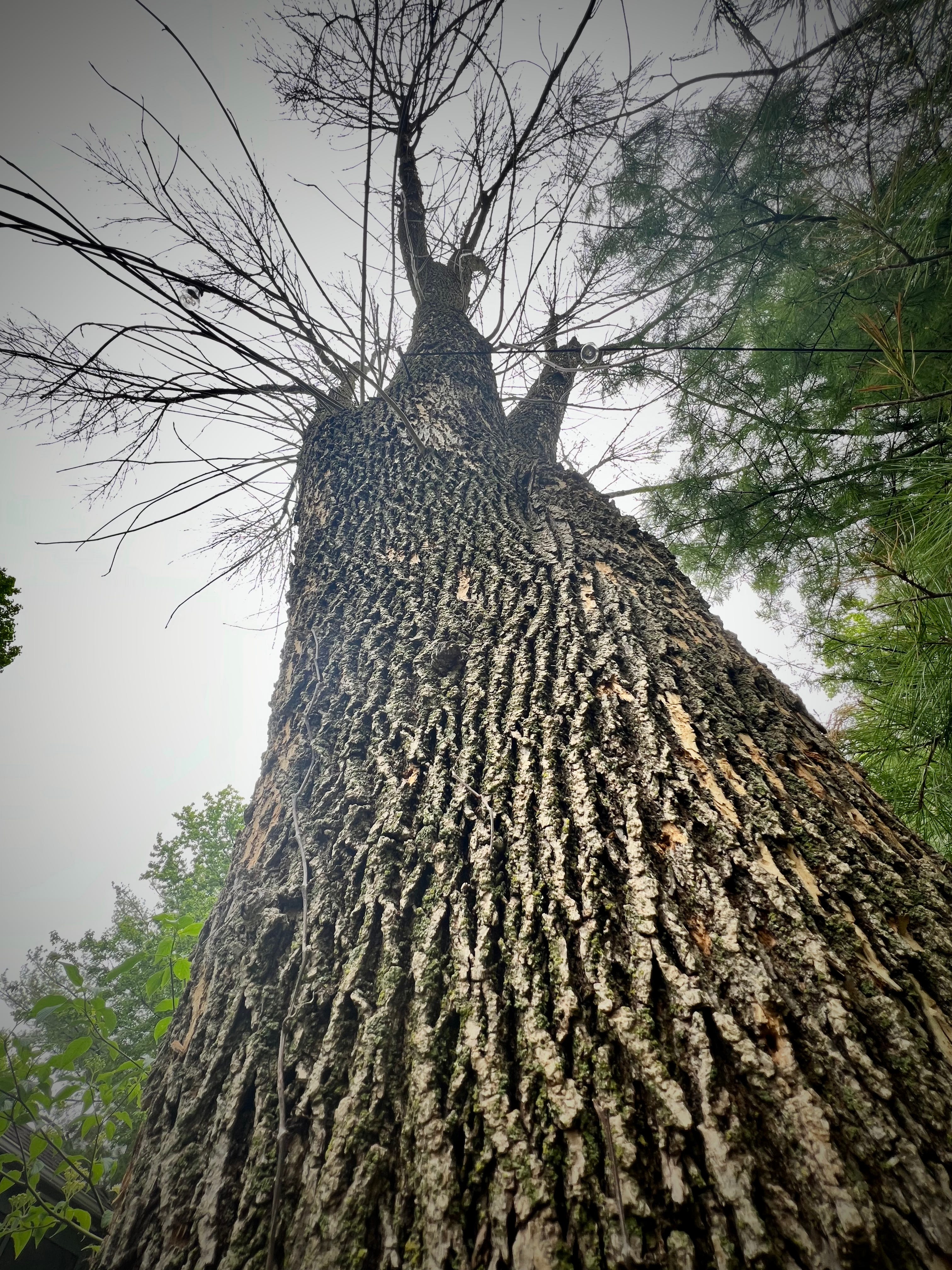
The tree is dead.
Do you remember the tree I am talking about?
The one I hoped was only slow. Slower than the others. Slower to come back into greening after a Minnesota winter.
Well, guess what?
It never started greening.
Not only did I lose a bet with a friend of mine, who concluded the tree was dead, but we also lost the tree.
I had identified with it. Needing more time to spring into green after a harsh winter.
But now, dead upon arrival?
Where is that narrative carrying me?
We have walked through the season of the tomb, the Easter hallelujahs, and now Pentecost, the Spirit flowing freely among us.
And something in me is feeling like that dead tree in our backyard.
After a period of overflowing creativity, where I could not write as fast as my ideas were coming, I am looking at the plans I made, the words I wrote, and I feel like the dead tree in my backyard.
“It has to go,” the expert said, and gave us a quote for the tree’s removal.
“Maybe there is another chance,” I begged. “Maybe next year.”
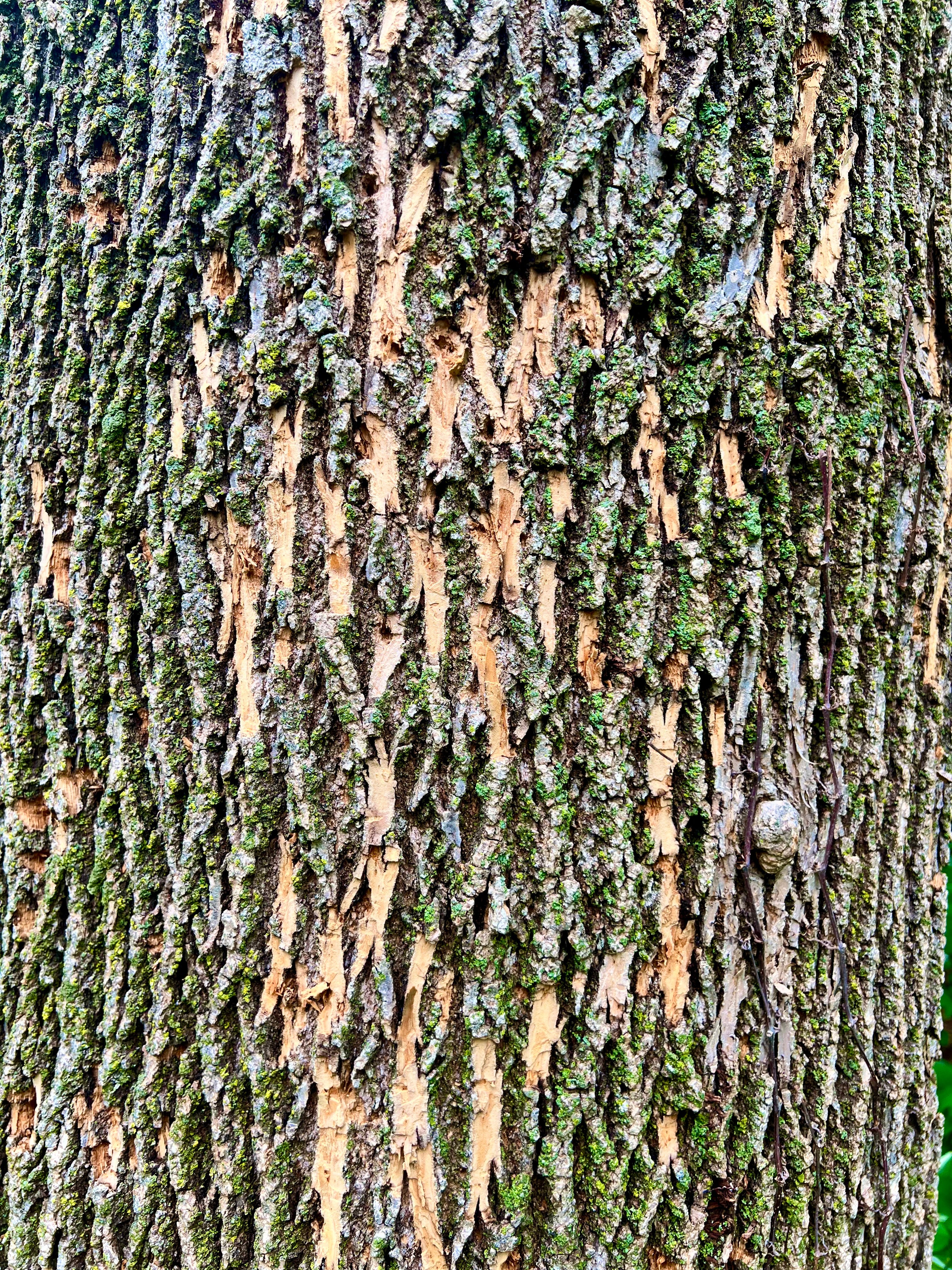
But the ash tree was gone. Taken over by an insect who ate it alive from the inside.
Only one branch decided to offer us a last hurrah, poking out green leaves despite its terminal diagnosis.
So it is not dead yet. Just slowly dying.
The midday sun now hits our house harder, with those dead branches letting through most of the sunlight.
“It will take years to grow another tree as high to shade us from the midday sun,” I complained.
“Maybe we can plant a smaller tree closer to the house?” my husband responded.
But first, the dying tree has to go.
Is it okay to grieve a tree?
Or am I grieving all that has been dying in me lately?
The parts which I thought were just slow but, on closer inspection, have indeed died?
In the garden I can at least point to the tree. But in my interior landscape I do not even know where to point.
Do you know this feeling when something inside feels like it is dying and we do not quite know what or why?
When we cannot point to a place other than our aching heart?
Where is all that sadness coming from in the middle of the season of flourishing?
**
Today we collected the larvae of the sawfly from the hollyhocks.
After the plants had grown splendidly, featuring several stems covered in buds, the holes appeared. First slowly, then almost overnight, leaving only delicate grids behind where once green leaves were.
“Let’s get them,” I said to my husband, and off we went on our rescue mission.
We collected the tiny green larvae and let them slide into a bucket of soapy water.
“Is it kinder to kill them between my fingers or in the soapy water?” I wondered aloud. “Is it nice to kill them at all?”
And so there we stood, two academics, philosophizing about death while picking insects from a plant.
“To rescue the one, we have to kill the other,” my husband said.
It was a sad truth to behold.
The larvae had just emerged from eggs hidden deep in the frozen Minnesota soil.
And still, this year I decided not to let them get my beloved hollyhocks.
**
Now, dear friends, I do not know where to end this blessing.
I could try some wise words about death belonging to creation.
Or tell you that if I had treated the ash tree against the emerald ash borer years ago, perhaps I could have saved it.
But none of that would still that nagging feeling inside when something is dying.
Maybe it needs to die to make room for something more beautiful?
Nice metaphors do not cut it when something inside feels like a dying tree in the middle of spring.
Nice Metaphors do not hold us when it seems like a dead cult is running the world.
Where can we find consolation?
The only words that come to mind are ancient ones. (Sometimes it helps to be a pastor’s kid.)
“Media vita in morte sumus.
In the midst of life we are in death.”
Pastors often read these words at the graveside. And:
“Quem quaerimus adiutorem nisi te, Domine?
Of whom may we seek for succor, but of thee, O Lord?”
And perhaps that is where consolation begins.
Not in explaining death away.
Not in turning every loss into a lesson.
Not in insisting that every dying tree is secretly preparing a resurrection.
The ash tree is dying.
The hollyhocks live because other lives do not.
The world is beautiful and terrible all at once.
And somewhere between Pentecost’s green fire and the anticipated sound of chainsaws, we stand with our questions.
Spirit does not arrive as certainty.
Sometimes Spirit is simply the strength to remain present.
To grieve what is dying.
To tend what is living.
To love what will not last.
And to trust that, even here,
here in this strange season
where flourishing and dying
seem to share the same garden
we are not alone.
With all my heart, Almut
PS: If you can, leave a heart, a word or a line which resonated with you in the comments, so we know you have been here :-)
To Ponder
Media vita in morte sumus.
In the midst of life we are surrounded by death.
What in your life are you grieving today?
And what is still asking to be tended?

Thank you for reading, sharing, and supporting Cloister Notes, an independent letter for dancing monks and weary pilgrims, a place to deepen your path and listen for the wisdom within. Your presence helps keep this small cloister alive.
If what you find here speaks to you, you are invited to join as a free or or paid subscriber, and become part of this communion of fellow pilgrims. Paid subscribers sustain this work and keep it open to all, and are part of the inner cloister, with access to the archive, live gatherings, and seasonal contemplations.
You can share this letter by simply forwarding this email, by sharing it on your social networks, or if you are a substacker, by restacking it. Thank you, thank you.
In case you missed it
From (Mid)weekly Blessings

From our On Being Human series

From our Gardening as Spiritual Practice series

From our paid community


"Not in insisting that every dying tree is secretly preparing a resurrection.
The ash tree is dying.
The hollyhocks live because other lives do not.
The world is beautiful and terrible all at once."
Too much, and at the same time not enough...
Yes you absolutely can grieve a tree. That’s something I learned from my mother, who hated to see a tree cut down. And often quoted the Joyce Kilmer poem. And our indigenous writers remind us that trees are among our relatives in the natural world who should be respected, cared for, celebrated, and grieved. (I’m thinking of Braiding Sweetgrass by Robin Hall Kimmerer.) All to say I’m sorry for your lost tree and all the gifts it gave in its time.